


Molecular cocktail making is an innovative discipline within the world of mixology. It applies principles of science to transform ingredients and present drinks in a surprising and multisensory way. Far from being just a fad, molecular cocktail making has established itself as an experience that merges creativity, technique, and flavor. Below, we tell you all the details.
What is molecular cocktail making and what does it consist of?
Molecular cocktail making is an innovative discipline within the world of mixology. It applies principles of physical and chemical science to achieve visually stunning drinks.
Unlike traditional cocktail making, where ingredients are mixed directly, molecular cocktail making seeks effects. Textures, states, and temperatures are modified to achieve effects such as foams, gels, aromatic mists, or liquid spheres. All without losing sight of the balance of flavor.
History and origin of molecular cocktail making
Molecular cocktail making was born influenced by molecular gastronomy. A culinary trend that originated in the 80s and was driven by chefs such as Hervé This or Ferran Adrià. Soon, visionary bartenders began to apply these techniques in the preparation of drinks, transforming the experience of drinking a cocktail.
One of the first references was Tony Conigliaro in London, who opened the bar “69 Colebrooke Row.” He had his own laboratory to develop recipes from molecular reactions.
What is the molecular technique of cocktail making?
Below, we tell you the main techniques that are applied in molecular cocktail making:
1. Spherification
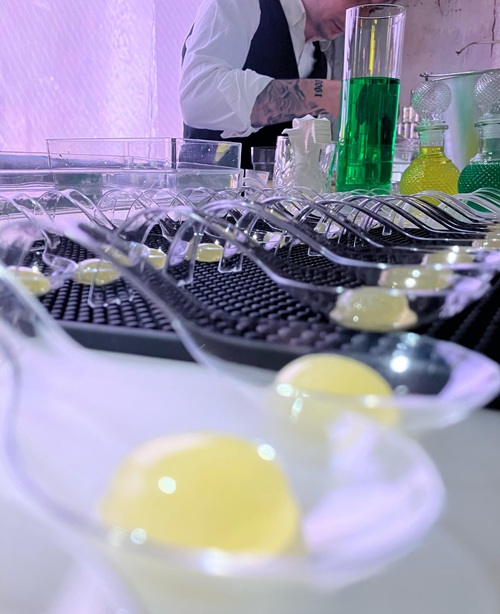
It consists of encapsulating liquids in spheres with a gelatinous membrane, simulating the appearance and texture of caviar. It is perfect for serving small doses of intense flavors.
2. Gelification
It allows transforming liquids into gels through the use of agents such as agar-agar. It is used to create solid textures that melt in the mouth.
3. Emulsion and foams
With lecithin or siphons, aromatic foams are generated that provide a light but intense layer of flavor to the cocktail.
4. Use of liquid nitrogen
Ideal for creating smoke effects or for cooling drinks quickly, adding drama to the presentation.
5. Carbonation
Injecting carbon dioxide to give effervescence to liquids that normally do not have it.
Ingredients and key tools
To practice molecular cocktail making, a selection of specific ingredients and utensils is needed. For example:
- Ingredients: agar-agar, lecithin, alginate, gluconolactone, liquid nitrogen, dry ice, among others.
- Tools: syringes, siphons, digital thermometers, measuring spoons, pipettes, water baths, precision scales.
What are the types of cocktails?
Spherified Mojito
A reinvented version of the classic mojito where rum, lime, and mint are encapsulated in spheres for an explosion of flavor in each bite.
Lime foam Margarita
A traditional margarita topped with a lime foam that provides an enveloping aroma from the first sip.
Cosmopolitan in gel
Served in the form of gelatin on a tasting spoon, perfect for surprising diners at special events.
Smoked Negroni
Presented in a glass bell that is filled with aromatic wood smoke, providing an extra sensory experience to the drink.
Why choose molecular cocktail making for your event?
Molecular cocktail making has become a growing trend in corporate events, weddings, and exclusive celebrations. These are some reasons why more and more people are betting on it:
- Visual impact: The presentations are impressive and aesthetically attractive.
- Multisensory experience: Combines taste, sight, aroma, and texture.
- Differentiation: Raises the level of any event, making it memorable.
- Personalization: Cocktails can be adapted to the branding or theme of the event.
Molecular cocktail making workshops: an educational and fun experience
In Spain, more and more cooking schools and mixology spaces offer molecular cocktail making workshops. These activities are ideal as:
- Team building activities
- Birthday gifts or original experiences
- Training for bartenders
- Private or corporate events
During the workshop, participants learn to create their own cocktails, understanding the scientific basis of each technique, and the best part: enjoying a delicious result.
Where to enjoy molecular cocktail making
At TheBestCombi, we prepare the most innovative molecular cocktails to surprise you at your events.
In addition, in cities like Madrid, Barcelona, or Valencia, you can find specialized bars and gastronomic spaces where molecular cocktail making is practiced. Many venues even offer live shows where bartenders prepare cocktails before the client’s eyes.
Tips for getting started in molecular cocktail making
- Start with simple recipes: such as basic foams or spherifications.
- Learn well about the ingredients: Some require exact measurements to be safe.
- Invest in appropriate tools: A good basic kit will facilitate learning.
- Learn with professionals: Taking a course or workshop will help you avoid mistakes and better understand the techniques.
Therefore, molecular cocktail making represents the evolution of mixology towards a much richer, more creative, and unforgettable experience. Whether you are a fan or organizing an event, incorporating this trend can make a difference.